22 February, 2007

P-a-L R: Australia Conquered


Greetings, Naturalists and friends of the Society.
I was fortunate enough to survive the perilous Muscidae and boisterous Corvidae of the Australian bush, through which I rambled for the month of January 2007. In subsequent posts I will be highlighting different aspects of Naturale History Phenomena encountered, featuring photos and brief explanations of each wonder from Down Under I saw. For the remainder of the semester, now that stable and consistent LAN communication has been established in my office on the South Island of New Zealand, I will literally keep you posted on phenomena and interesting tidbits in a running cascade of weekly updates. I do hope all is well back at HQ. This is the Prefect, signing out.

07 February, 2007

yep! Still beautiful.

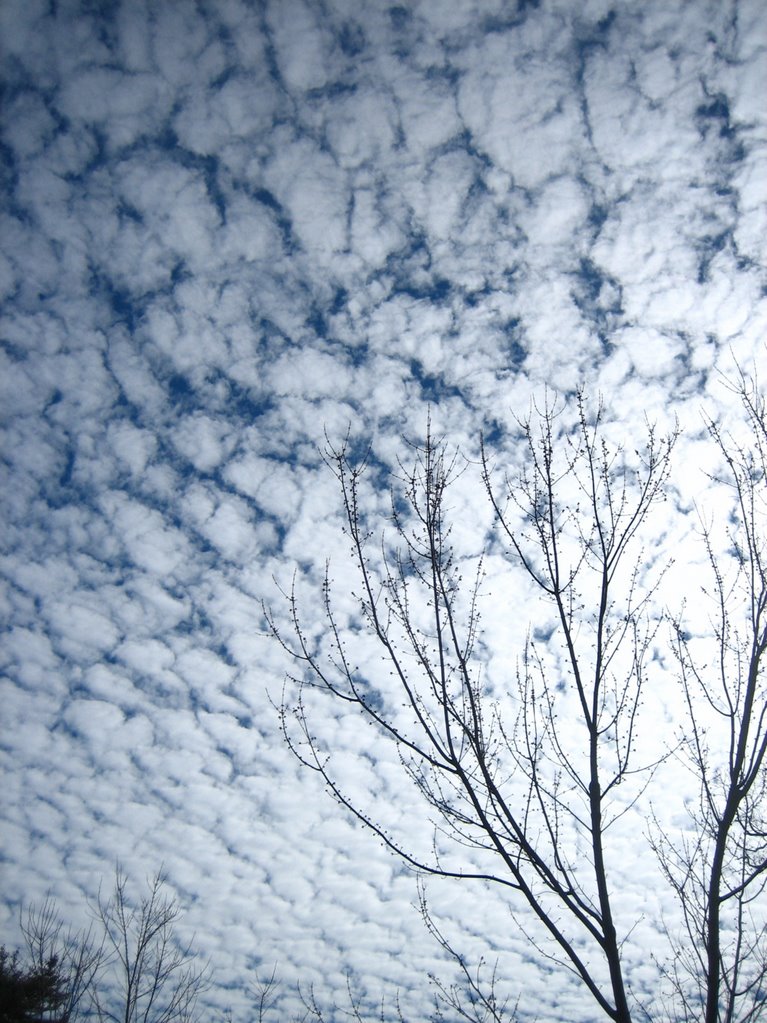
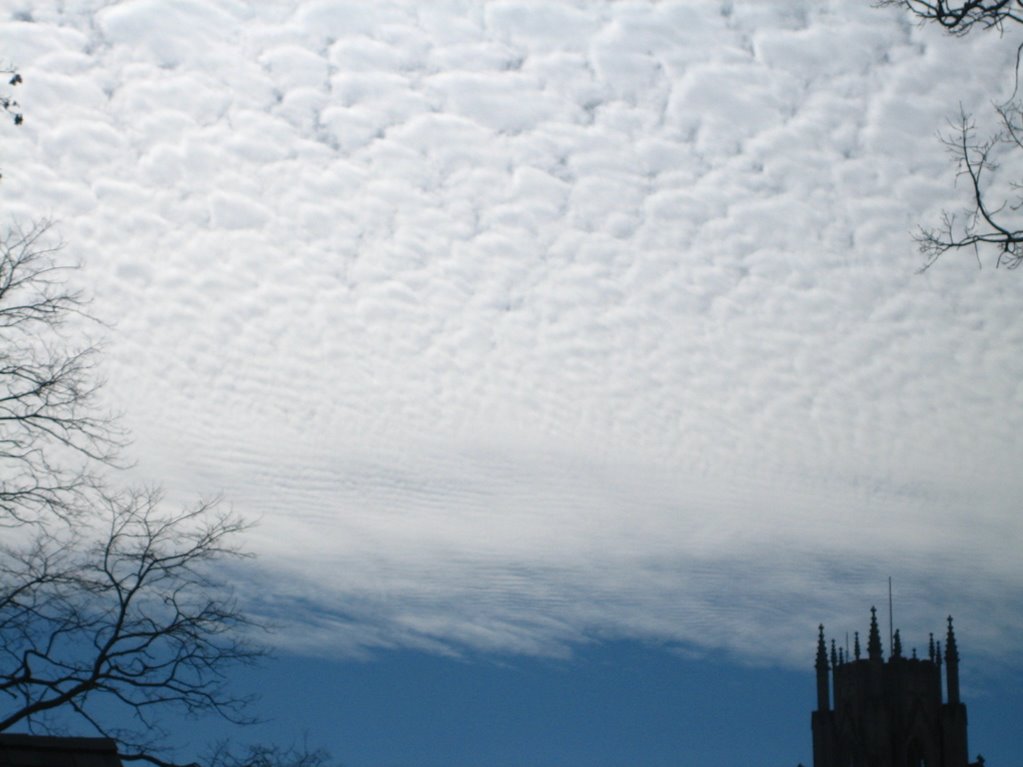
some sort of altocumulus floating around up there today:
(and a sunset from this weekend)


05 February, 2007

Woods Reservoir Trip

From the chilly shores of Woods Res, the SNHS spotted the following feathered dinosaurs. The loons and the eagle were the highlight. I've never seen so many loons in one spot! The eagle circled several times, really close, then dived down to get a yummy dead fish, then flew off again. Great looks at this incredible bird!

Participants:

Angie Langevin, Elspeth Iralu, Daniel McCoy, Jake Sberna, Diana Patterson, Valerie Moye, David Haskell

Canada Goose 78
Mallard 4
Ruddy Duck 1
Common Loon 88
Pied-billed Grebe 44
Horned Grebe 6
Turkey Vulture 8
Bald Eagle 1
Sharp-shinned Hawk 1
Red-tailed Hawk 1
American Coot 85
Killdeer 2
Bonaparte's Gull 1
Ring-billed Gull 33
Belted Kingfisher 3
Red-headed Woodpecker 1
Blue Jay 4
American Crow 15
Northern Mockingbird 6
Cedar Waxwing 9
Song Sparrow 5
Dark-eyed Junco 1
Northern Cardinal 2
Common Grackle 8

29 January, 2007

MEETING TONIGHT

Join the Society in the Torian Room at 7:30 tonight for coffee and a discussion of our previous and upcoming adventures. We will be receiving a message from our Prefect-at-Large before I present our new Canopus.

cheers
B.L.Padgett, esq., Patrician.

13 January, 2007

Senegal bird list

This is a list of birds that I've seen so far. I've tried to classify them by order, but I'm not certain about the taxonomy, so please let me know if you spot mistakes.

Places visited:
Yoff, suburban village on West Atlantic coast
Mboumbaye, rural village on an estuary of Senegal River
Le Parc National de la Langue de Barbarie
Diama, rural village on the Senegal River (bordering Mauritania), 25km from Djoudj National Bird Park
Nder, rural village in sahel/savanna

1. Ciconiiformes
a. Long-tailed Cormorant, Phalacrocorax africanus
b. Great Cormorant, Phalacrocorax carbo
c. Grey Heron, Ardea cineria
d. Black Heron, Egretta ardesiaca
e. Black-Crowned Night Heron, Nycticorax nycticorax
f. Western Reef Egret, Egretta gularis
g. Little Egret, Egretta gardetta
h. Intermediate Egret, Egretta intermedia
i. Cattle Egret, Bubulcus ibis
j. Black Kite, Milvus migrans
k. Stone Curlew, Burhinus oedicnemus

2. Pelecaniformes
a. Great White Pelican, Pelecanus onocrotalus

3. Falconiformes
a. Osprey, Pandion haliaetus
b. African White-backed Vulture, Gyps africanus
c. Eurasian Griffon Vulture, Gyps fulvus

4. Charadriiformes
a. Common Moorhen, Gallinula chloropus
b. African Jacana, Actophilornis African
c. Spur-winged Lapwing, Vanellus spinosus
d. Long-Tailed Skua, Stercorarius longicaudus
e. Sabine’s Gull, Larus sabini
f. Audouin’s Gull, Larus audouinii
g. Bridled Tern, Sterna anaethetus

5. Columbiformes
a. Laughing Dove, Streptopelia senegalensis
b. Vinaceous Dove, Streptopelia vinacea

6. Cuculiformes
a. Senegal Coucal, Centropus senegalensis

7. Apodiformes
a. Common Swift, Apus apus

8. Coraciiformes
b. Little Bee-eater, Merops pussilus

7. Upupiformes
a. Hoopoe, Upupa epops

8. Bucerotiformes
a. Red-billed Hornbill, Tockus erythrorhynchus

9. Passeriformes
a. Beautiful Sunbird, Cinnyris pulchellus
b. Pygmy Sunbird, Hedydipna platura
c. Greater Blue-eared Starling, Lamprotornis pulcher
d. Long-tailed Glossy Starling, Lamprotornis caudatus
e. Crested Lark, Galerida cristata
f. Sudan Golden Sparrow, Passer Luteus
g. Northern Grey-headed Sparrow, Passer griseus
h. House Sparrow, Passer domesticus
i. Little Weaver, Ploceus luteolus
j. Vitelline Masked Weaver, Ploceus vitellinus
k. Village Weaver, Ploceus cucullatus
l. Red-billed Quelea, Quelea quelea
m. Lavender Waxbill, Estrilda caerulescens
n. Red-Cheeked Cordon-blue, Uraeginthus bengalus
o. Village Indigobird, Vidua chalybeata
p. Red-billed Firefinch, Lagonosticta senegala
q. African Silverbill, Euodice cantans
r. Yellow Wagtail, Motacilla flava
s. White Wagtail, Motacilla alba
t. Pied Crow, Corvus albus
u. Common Bulbul, Pycnonotus barbatu
w. Common House Martin, Delichon urbicum
x. Common Sand Martin, Riparia riparia

03 January, 2007

un goût du Sénégal

Na nga def! I am in Senegal for a brief spell, amidst foriegn birds, bugs, and vegetation (and a few not so foreign!). Here are few:


01 January, 2007

Wintering

Good morning friends!

Greetings from the Gallup Sag! In the last week, I've traveled east past the Zuni Uplift to the Sangre to Christo Mountains and South along the Rio Grande River and Rio Grande Rift to Bosque del Apache National Wildlife Refuge, near Socorro, New Mexico. Water from the Rio Grande is diverted here to form a wetlands suitable for migratory birds. Thousands of snow geese and sandhill cranes winter at the Bosque and hundreds (thousands?) of birders in down jackets carrying macro lenses covered in camo print come to watch the birds. Despite a fever the night before, I woke at 5:30 the morning I was in Socorro to watch the snow geese Fly Out from their nighttime rest spot. When the sun's first light hit the lake, all two thousand geese on the lake flew up and over the people watching from the shore. The noise of wings flapping was incredible. In the afternoon, I saw mountain bluebirds, coots, mallards, pintails, shovelers, Harris' Hawks, Cooper hawks, Red tailed Hawks, two bald eagles, one loggerhead shrike, one pheasant, a few great blue herons, and ravens. (The call of the west, Angie!) I hiked up an arroyo to the top of a mesa and found sandstone, breccia, and volcanic rocks. I have to admit that I was even more excited by the rocks than by the birds.

When I woke up after my second night in Socorro, I found that it had snowed all night and that every road west (homeward) was closed. I drove North back to Albuquerque and resigned myself to sleeping at my grandparents house. My friends and I had a violent snowball fight and made a snowman on what looked like sidewalk, but turned out to be someone's front yard. It was the largest recorded snow ever in Albuquerque. It snowed 11-20 inches throughout the city in 24 hours, breaking the past record of 10 inches in 24 hours. The road home opened up that evening, and we got home safely. The sun set as we drove from Albuqerque to Gallup. Snow covered all the mesas and hogbacks and flat land for as far as we could see and electric pink and orange light flooded out from behind the clouds, so that even the snow looked pink. It was the most beautiful sunset I have ever seen.

Yours, Elspeth

31 December, 2006

PaL-R: A Farewell

Many happy returns on the eve of the new year, fellow naturalists and friends of naturalists.

On the 2nd day of the 2007, I board a aeroplane in the infamous city of Orlando for a red-eye flight straight for the opposite side of the world. I have displayed several figures that provide geographic clues to my Down Under activities. The first shows the outline of my range for the next semester: Islands of Oceania including Australia, New Zealand, and the Fiji Islands. The next two figures reveal smaller scale images of this home range, and an approximate route of my planned activities.


I will update the Curator on occasion with accounts my various encounters with the natural history of Oceania.

Farewell, all, it is comforting to consider that from a geologic perspective, our time apart next semester will be infinitely short.

Until next time,
E.M. Keen, Ltd., Prefect-at-Large

24 December, 2006

Rennovating the Canopus

Today's balmy sun saw Dad and I engaged in a systematic refurbishment of the Society's heirloom chest. After stripping the deeply offensive rosy wallpaper from the interior, we decided that repapering would only replace the stupid look with something only a little less dumb. The wood inside the Canopus is rather attractive and covered here and there by glue, cheesecloth, and 100 year-old brown paper. We decided that a sanded down and finished version of this vintage surfacing would be far more attractive than a contrived papering. I will, however, still be including framed portraits of our founders inside upon the upturned lid. We are also replacing the handles, and have found that the previous proprietor of this noble box had the bad taste to use imitation leather belts to replace the original handles - a move congruent with the scads of Grandma-barf bouquet wallpaper we unceremoniously (and rather laboriously) purged from the innards of this vessel. New chains have been acquired to secure the lid and support its cavernous open gape. The new shelving upon the upper reaches of the Canopian innards was constructed with care by C.R. Padgett, Senior, Society Craftsman. Materials include: American Cherry and New Zealand heart Remu woods, the latter imported from the South Pacific in the early 80's by C.R.P. This particular assembly is ideal for the storage of a) Digital Versatile Discs b) Small field guides c) endangered rodents. This is an update, the process is ongoing. Pictures of the final product are forthcoming.

A Merry Yule's Eve to you and yours.

B.L. Padgett, esq., Patrician

P-a-L R: The Natural History of my Backyard


Salutations on this Eve of Christmas. While for most of you, thoughts of the holiday season include leafless trees and bitter cold, Christmas in my town involves 80 degree weather, flying kites at the beach, and flip flops. While I already miss the colder climate of the cumberland plateau, the green foliage here gave me the opportunity to experiment with my new camera. If anyone is interested, here are some sample pics of plants from my backyard (this is easier than trying to email them).

20 December, 2006

Prefect-at-Large reports: The Everglades, in 12 hours


Aloha, mi amigos. Today, my colleage M.W. Kanagy and I braved the dangers of Florida interstate traffic to attempt a 12 hour blitzkrieg of the natural history of South Florida. Though the adventure did not yield findings as topographically and tropically diverse as those of the Caribbean archipelago, the everglades proved fascinating nonetheless.
Notable birds seen were thousands of bonaparte's gulls, the sandhill crane (just like the one's living in my backyard (very loud)), and wood storks. No alligators! Can you believe it?
The biodiversity highlight was definitely the mysterious Falconiformes with vertical wingbands and mysterious markings on its chest. More to come on this.
Moral of the story: Native Florida is marvelous, vast, and flat. A 12 hour driving survey may have been enough to satiate one's propensity for the 3ft elevation ecosystem.

To the top of the world,
E.M. Keen, Ltd., Prefect-at-Large

19 December, 2006

Prefect-at-Large reports: Kayaking for Christ!

POST FROM: Malabar, FL. Weather: Cloudless. Temp: 79 degrees.

Greetings, fellow naturalists:
Despite the gaudy imperialistic and ubiquitous presence of the radical capitalism of coastal tourism industry that so consistently causes my countenance to twist into uncontrollable spasms of disgust, the legendary wildlife of the Florida coast survives and at times prevails. A short sunset kayaking outing with my esteemed pater familias yielded the following encounters with some unique coastal fauna (sadly, no pictures):


-We were blindsided by a baby gopher tortoise in my own front yard as we tried to leave for our trip. Luckily, despite my terrible shock, I had the good sense to relocate him to the scrub sanctuary behind my house.
-Birds: Several angry osprey (Pandion haliaetus), too many blue herons (Ardea herodia), white ibis (Bubulcus ibis), several species of tern, ring-billed gulls (Larus delawarensis), Brown pelican (Pelicanus occidentalis), sandpipers, etc!
-some CRAZY spiders (species unknown)
-ANTLIONS GALORE (O. Neuroptera F. Myrmeliontidae) My father and I stumbled upon an island chock full of these buggers, so full in fact that the island was thereby christened respectfully as "Antlion Island"
-Several redfish "FINNING", or feeding in the shallows so that their fins were exposed to the air
-Schools of mullets alarmed by our Dagger kayaks
- A run in with several bottlenose dolphins (Tursiops truncatus), who, lucky for us, were not hungry at the time, because we got within 10 ft of them!

Also, a glorious sunset was seen. Sometimes Florida is great.
Tomorrow: A hasty, secret tour of the Everglades! A picture-filled report soon to come.

10 December, 2006

An interesting subject for contemplation


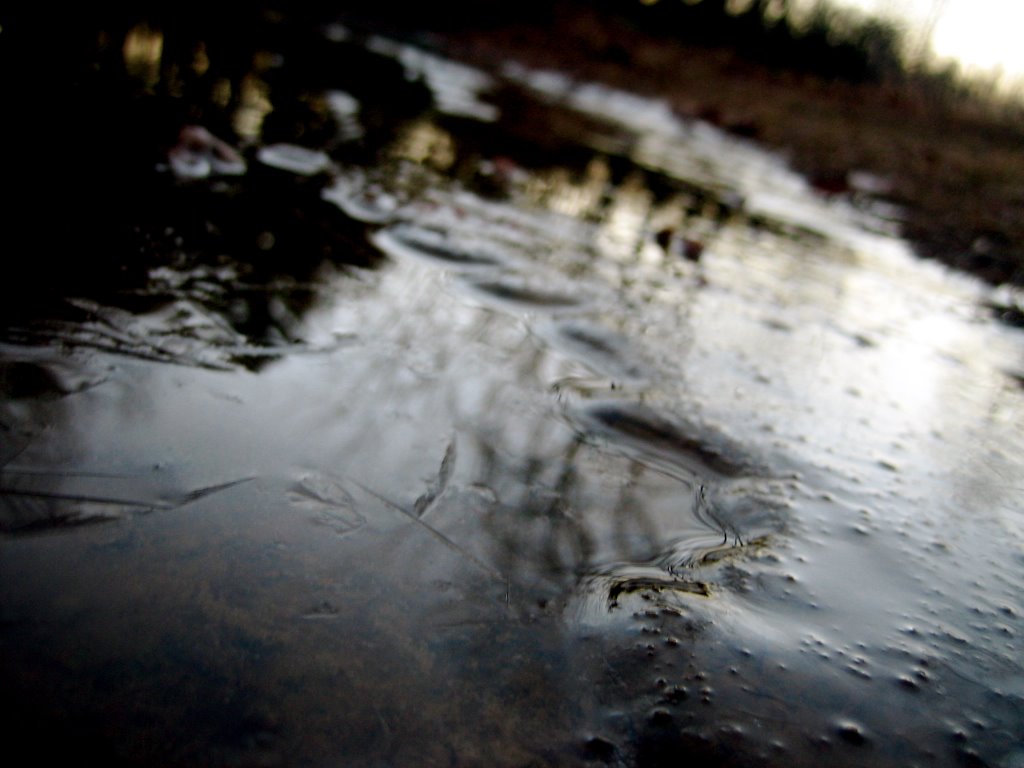
Yesterday evening we stopped by Lake Cheston on our way to the forestry cabin. Upon seeing the lake partially covered by a centimeter-thin layer of ice, what was supposed to be a brief pause grew into a lingering diversion. We encountered the most bizarre and extraordinary sound created by tossing rocks onto the frozen surface and hearing them reverberate with an eerie resonance. Highly recommend to anyone wishing for a touch of surreality.

Euphoniously,
L. V. Candler

05 December, 2006

Puerto Rico: a Conclusive Survey


Greetings, one and all.
Last evening, under a full moon and the incandescent lights of DuPont's infamous Torian Room, two eager naturalists brought their work with the Caribbean Arhipelago to a close with a presentation of their findings from a recent 48-hour blitzkrieg on the Island of Puerto Rico. A healthy representation of community members, faculty, and students were in attendence to experience a powerpoint presentation and short documentary on the expedition.


During our university’s Thanksgiving holiday 2006, Patrician B.L. Padgett and Prefect-at-Large E.M. Keen traveled to the island of Puerto Rico, commissioned by the Biology and Geology Departments, the Center for Teaching, and the Sewanee Outing Program to circumnavigate the isle in pursuit of any and every natural history phenomena they may encounter. In exchange for this opportunity, the duo committed to presenting a multimedia report on the natural history of the island through research and the display of our findings, in the form of photographs, video, and material collections, to the general public upon return.

Although the dates of this trip were November 24-27, travel complications allowed the students only 47 hours in the field. However, this did not inhibit their productivity, since what time tas lost the pair recovered through less sleep and shortened and fewer meals. During those 47 hours, Padgett and Keen successfully explored exhaustively 4 different topographic regions of the island: the limestone rich beaches of the west and north coasts, eastern rainforest among the central Cordilleras, the unbelievable karst topography of the northeast, and salt flats and dune systems of the south coast. While in the field, they spent a significant portion of our time in each topographic region taking sand samples, investigating geologic phenomena, observing bird life, classifying general vegetative structures, and capturing insects, amphibians, and reptiles through direct collection methods.

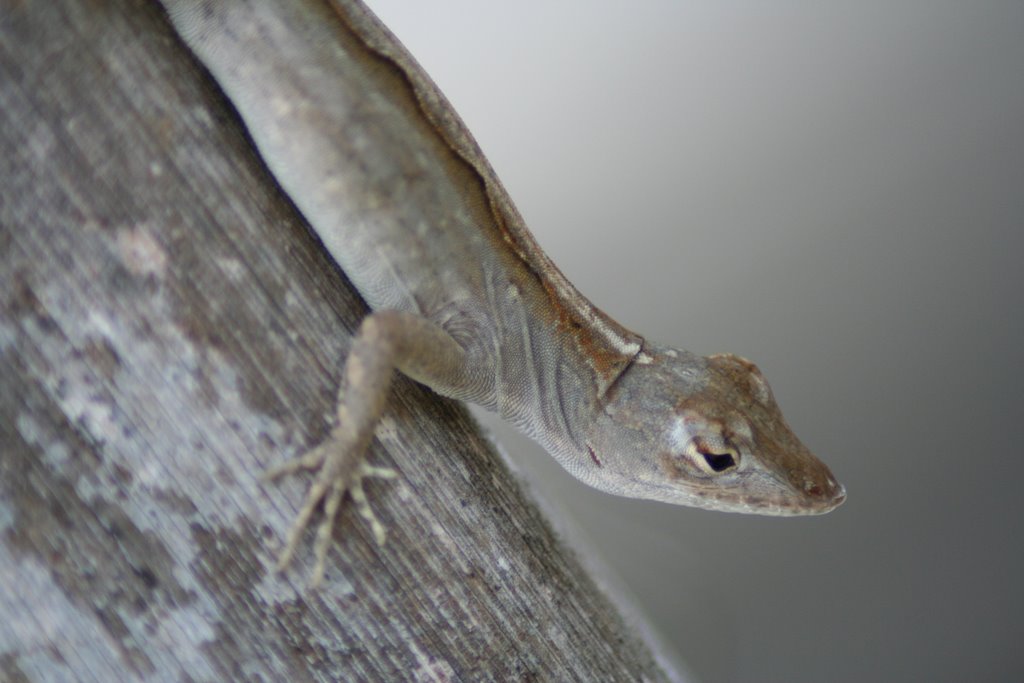
At the end of our stay, the tired naturalists packaged and mailed their insect collection back to mainland America. The collection includes over 60 specimens from 24 different families of Insecta. Over 120 photographs were taken, along with 90 minutes of video. Other noteworthy accomplishments were the video documentary of 2 endangered and endemic bird species, the collection of 12 different sand samples from the perimeter of the island, and the photographic documentation of an endemic Anole and the endemic Coqui frog.

The students recorded the unfolding of their expedition with annotated maps, field notebooks and sketchbooks, and with the use of a Hi-8 Sony HandiCam and two Canon Powershot digital cameras. Further information about the expedition can be found by contacting Padgett at bpadgett@sewanee.edu or Keen at ekeen@sewanee.edu.

Plans are currently being made to further the pair's survey of island biogeography in the near future. Of course, the Curator will be kept posted of further developments.

Naturally,
E.M. Keen, Ltd. Prefect-at-Large